OVERVIEW
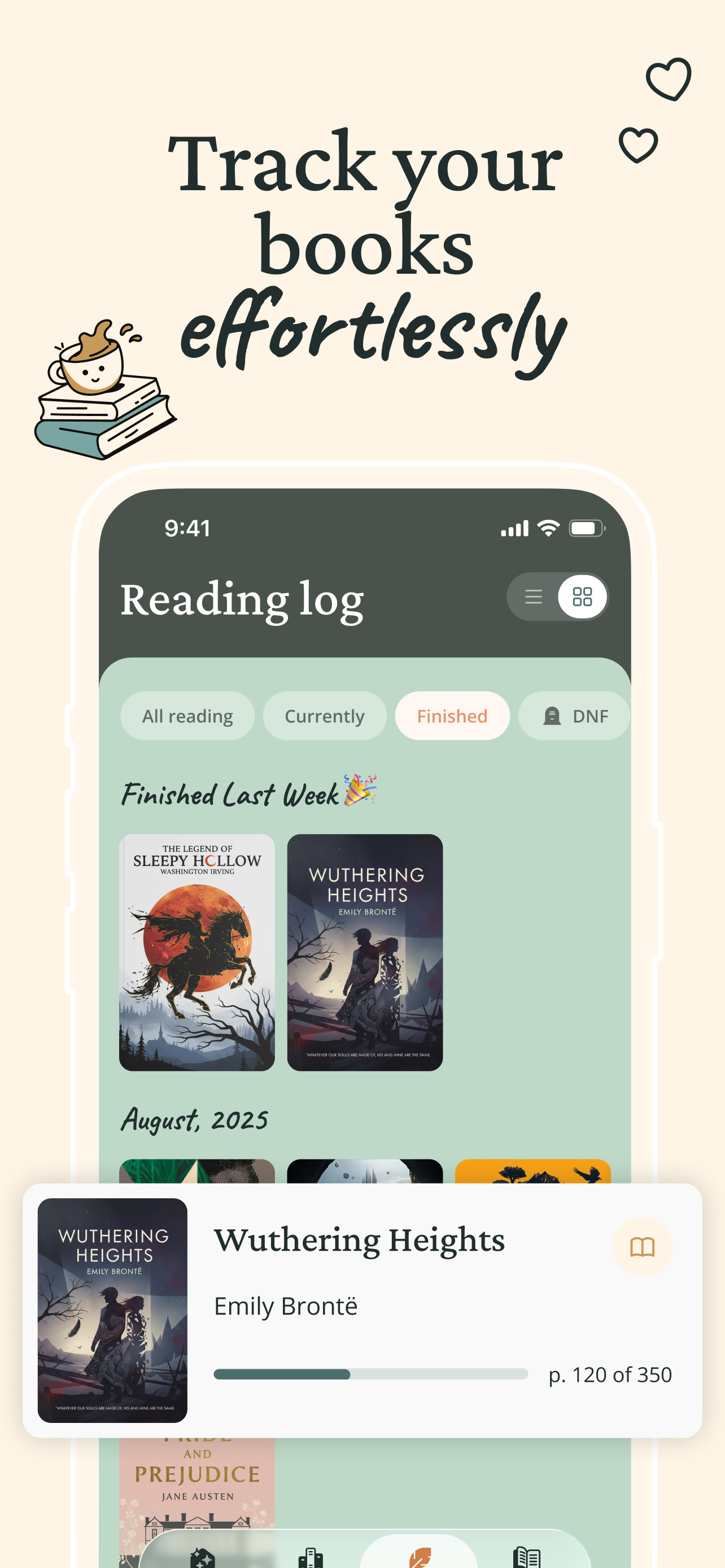
Most book tracker apps have started to feel like fitness apps — full of streaks, goals, and the quiet pressure to always be doing more. Reading Journey was built as the antidote to that. A low-pressure, visually fun reading journal that brings the joy back to books.
I co-founded Reading Journey alongside a developer and owned everything outside of code: product strategy, positioning, community, and all marketing. We launched with no budget, and no press. Just two people going up against Goodreads, an Amazon-owned app with millions of users.
MISSION
We couldn't out-resource the competition. So we had to out-connect them.
My strategy was to build the community before the product launched, then bring that community into the product itself. If readers felt like they helped build Reading Journey, they wouldn't just download it, they would become loyal fans. That meant being radically transparent about who we were, what we were building, and where we were going.
PLAN
I built the content strategy around three pillars:
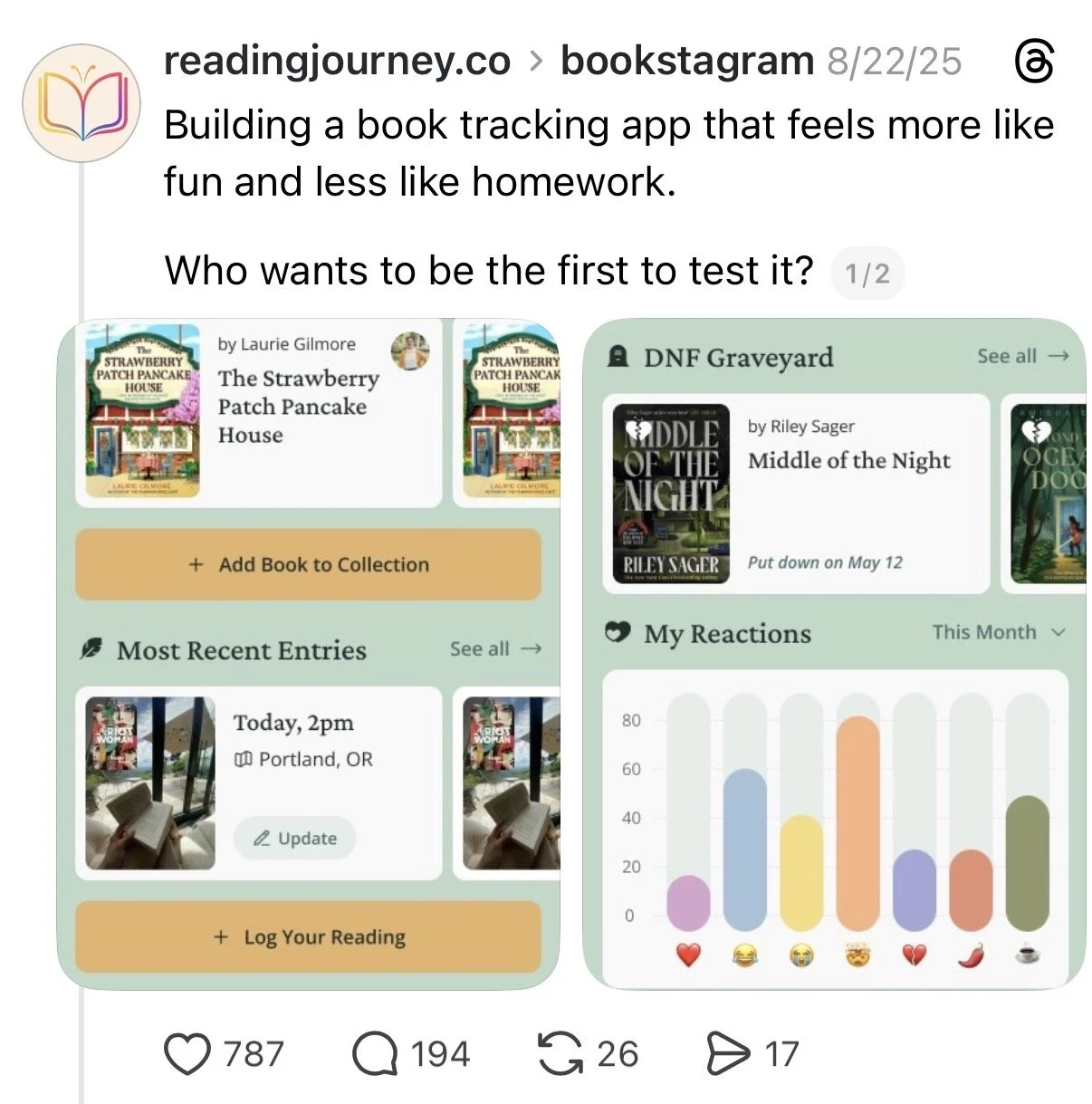
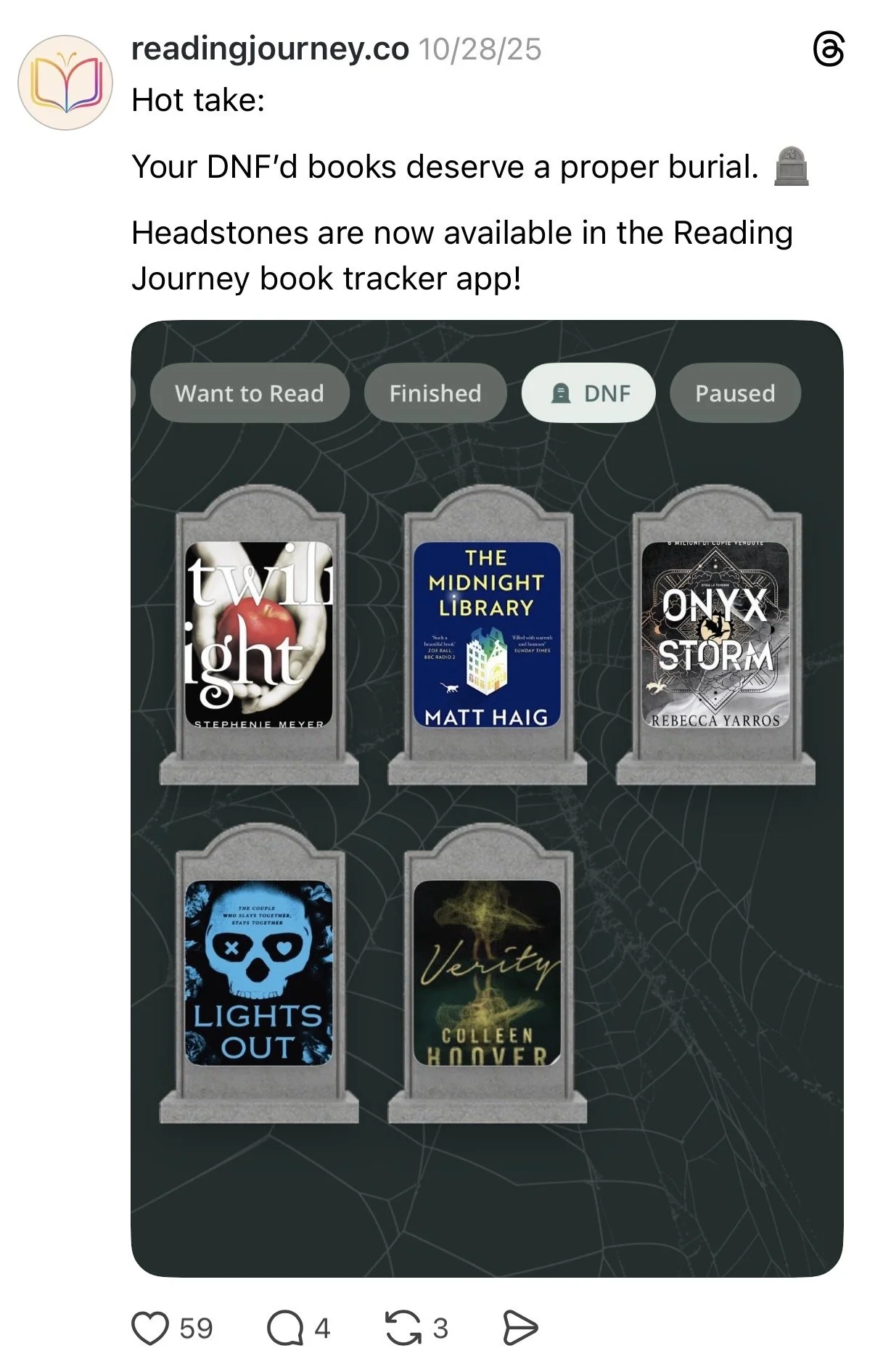
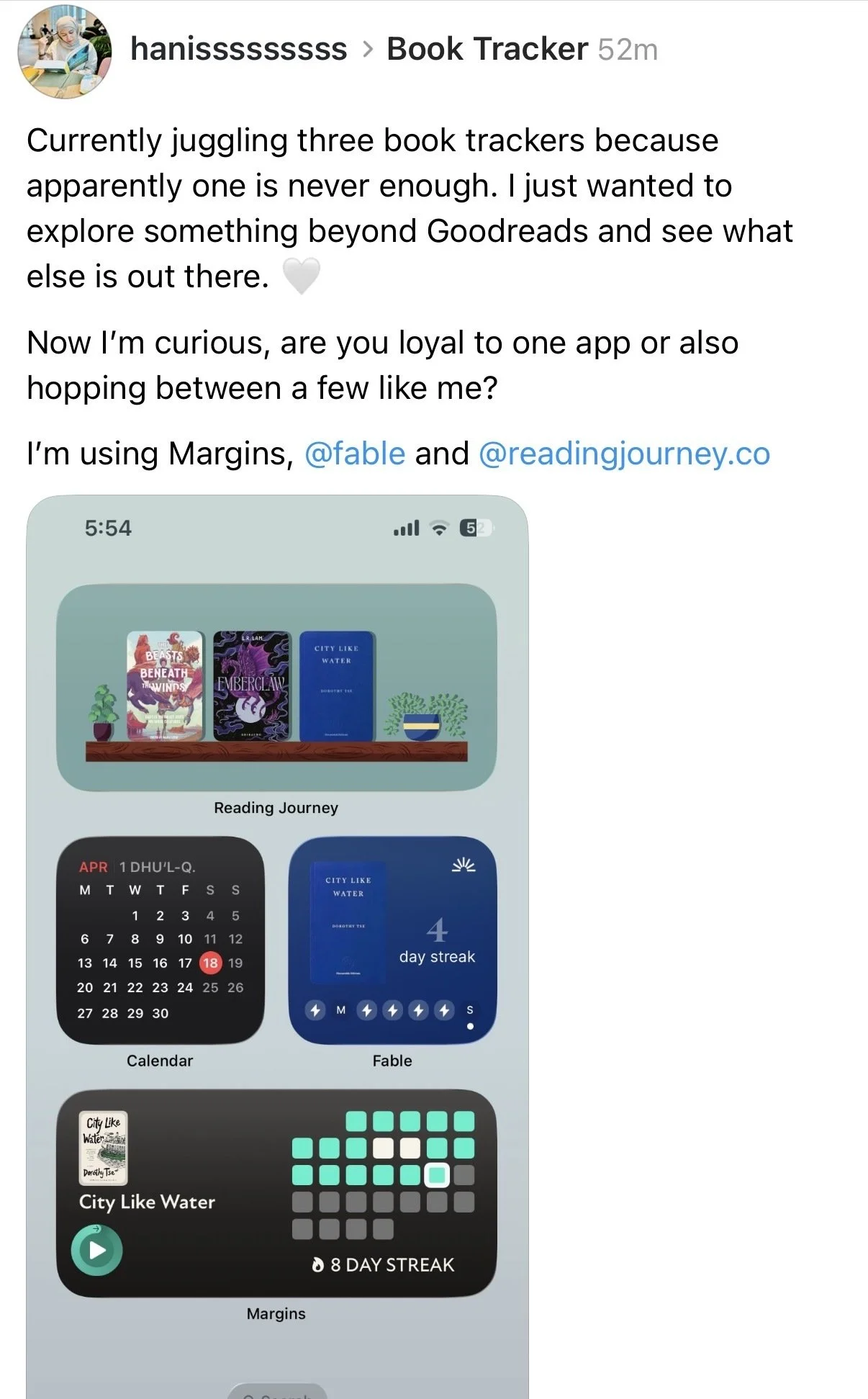
Building in public would be our advantage. Two humans going up against corporate apps is a story worth telling and a reason for readers to root for us. I chose Threads as the primary platform for this before the app even launched, specifically to build a beta community and warm up an audience before we had a product to sell.
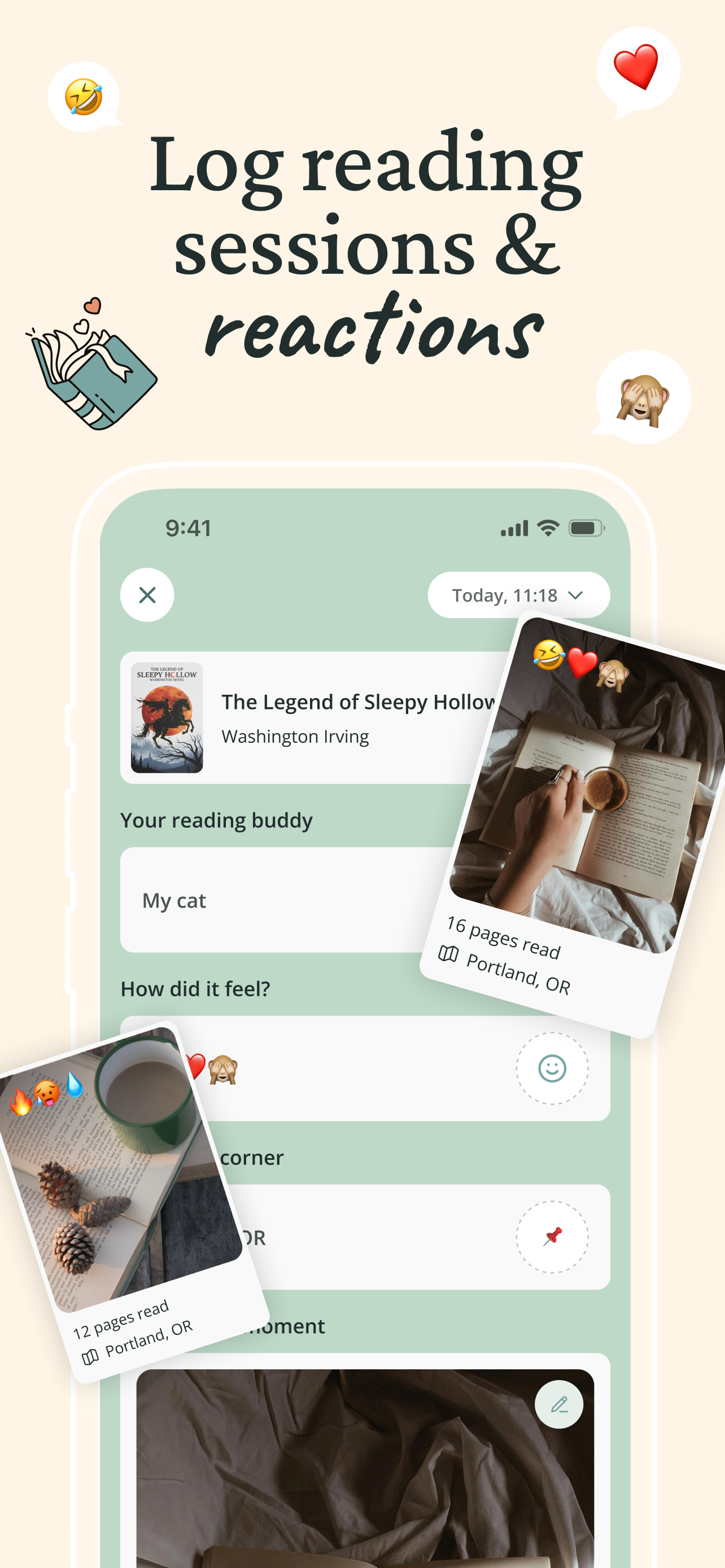
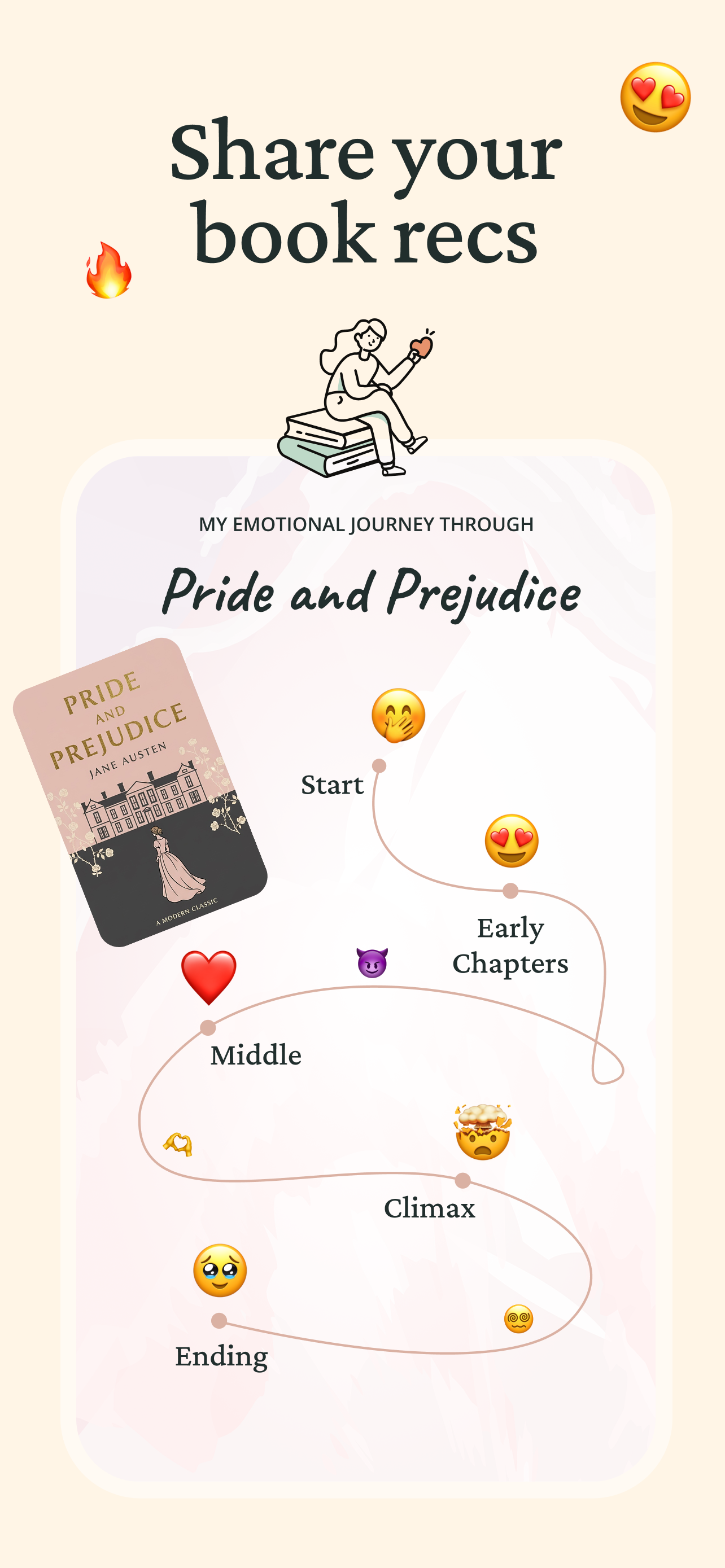
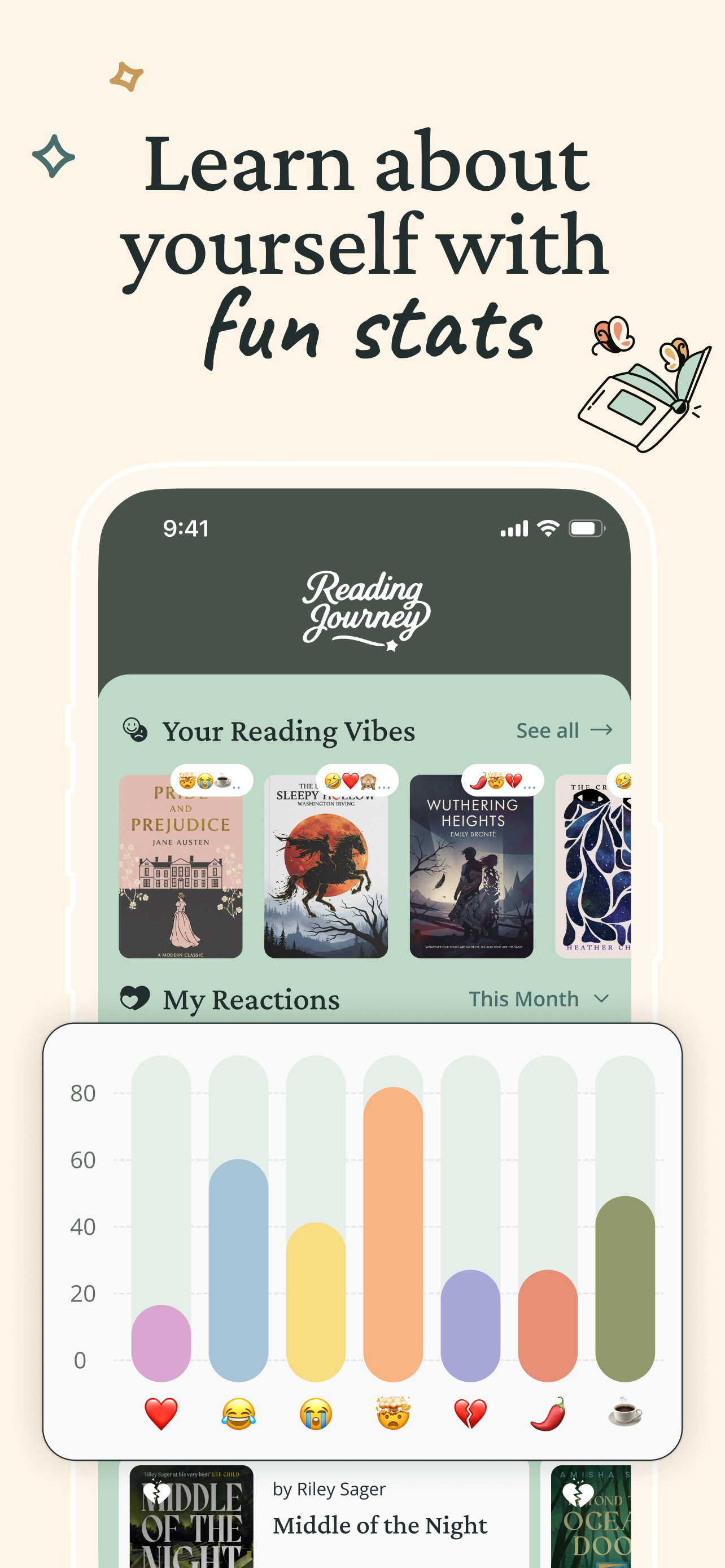
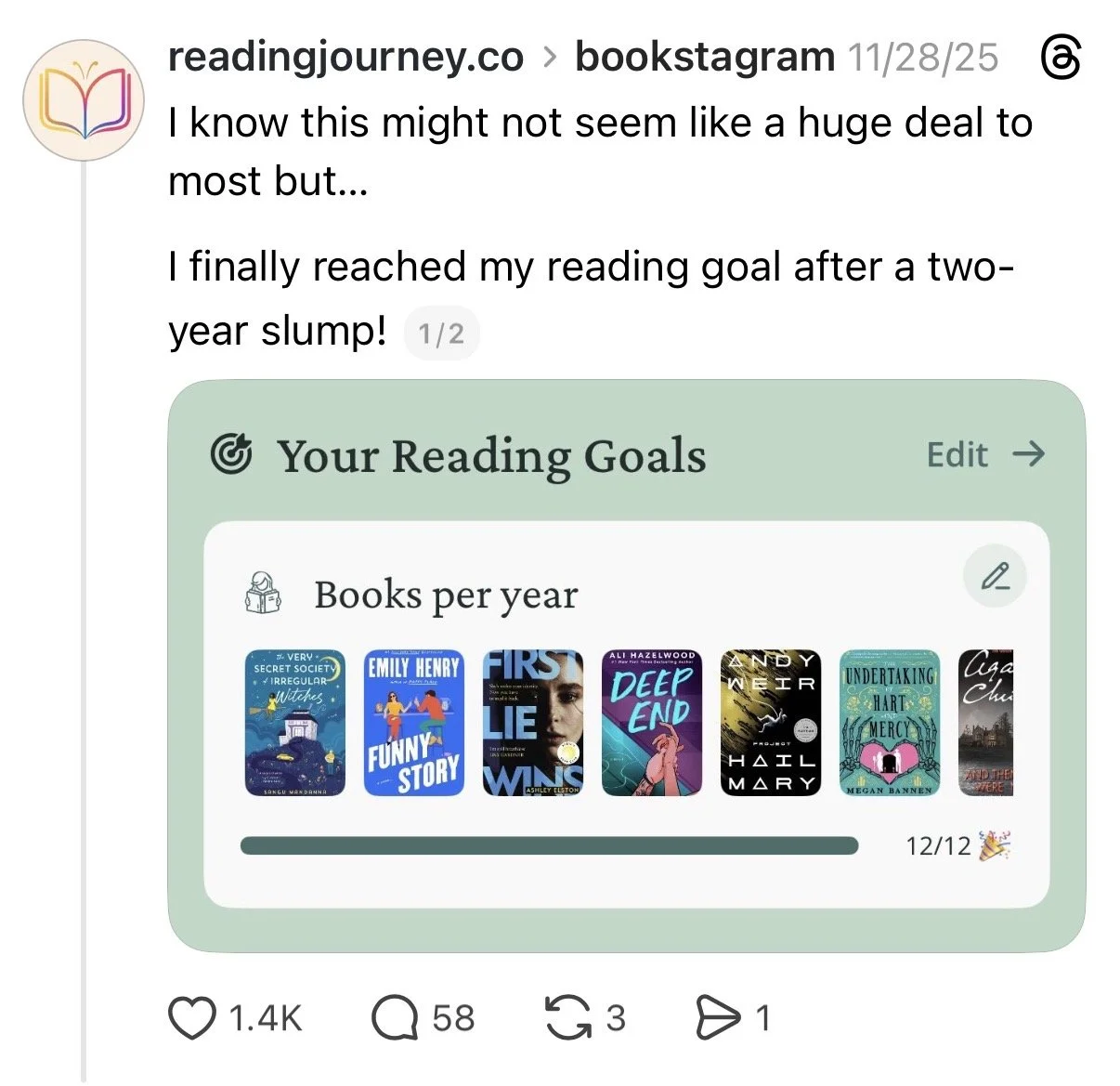
Feature storytelling would drive visual FOMO. Every feature we built had to be explainable in one sentence and visually shareable. If it wasn't, it wasn't worth posting about. The goal was content that made someone stop scrolling and think "I need that on my phone."
Positioning would do the heavy lifting. In a category full of performance metrics, we would be the app that never told you to read more. That single idea “ low pressure, just you and your love for books” was the filter for every piece of content we made.
EXECUTION
Before launch, I built an audience on Threads by posting transparent, behind-the-scenes updates about the app — sharing our roadmap, asking the community what features they wanted, and documenting the experience of two people building something from scratch. That strategy grew a beta cohort of 1,000+ testers entirely through organic engagement, giving us both early feedback and a built-in launch audience.
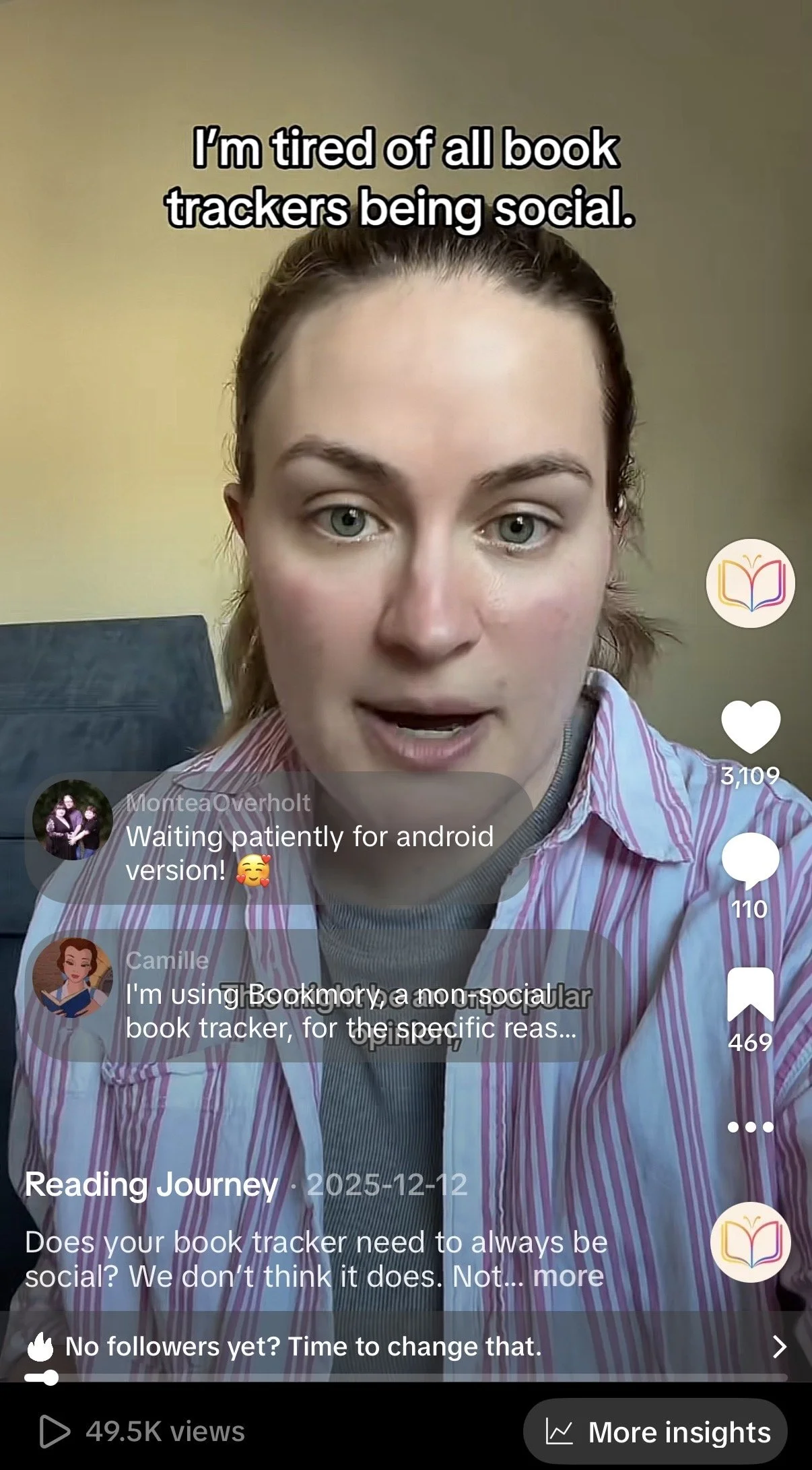
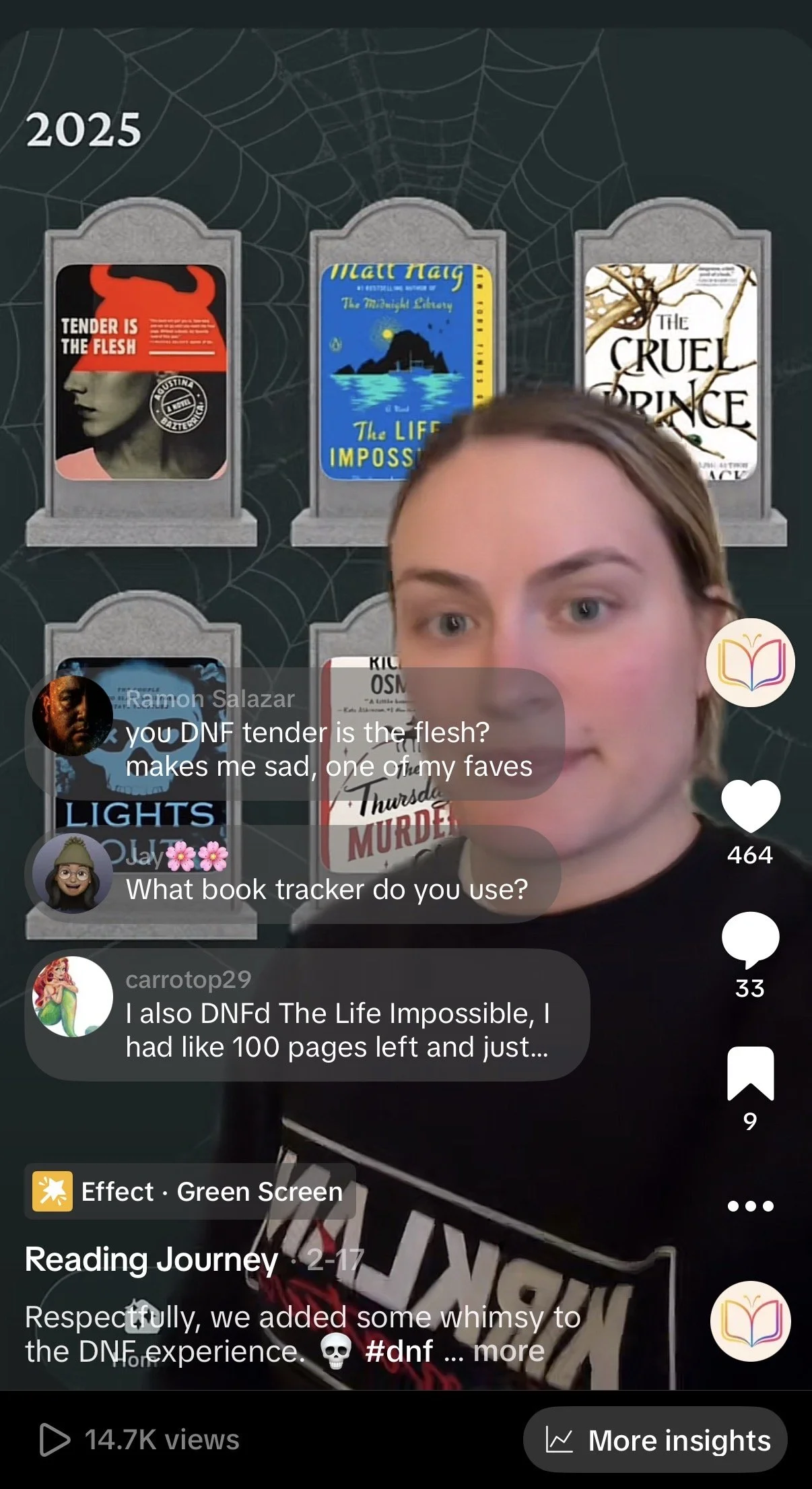
On TikTok, I started by posting as an individual on BookTok first — building credibility and warming up the algorithm before introducing the app. Content leaned into our positioning: low pressure, visually fun, and relatable to readers who felt burned out by streak-based trackers.
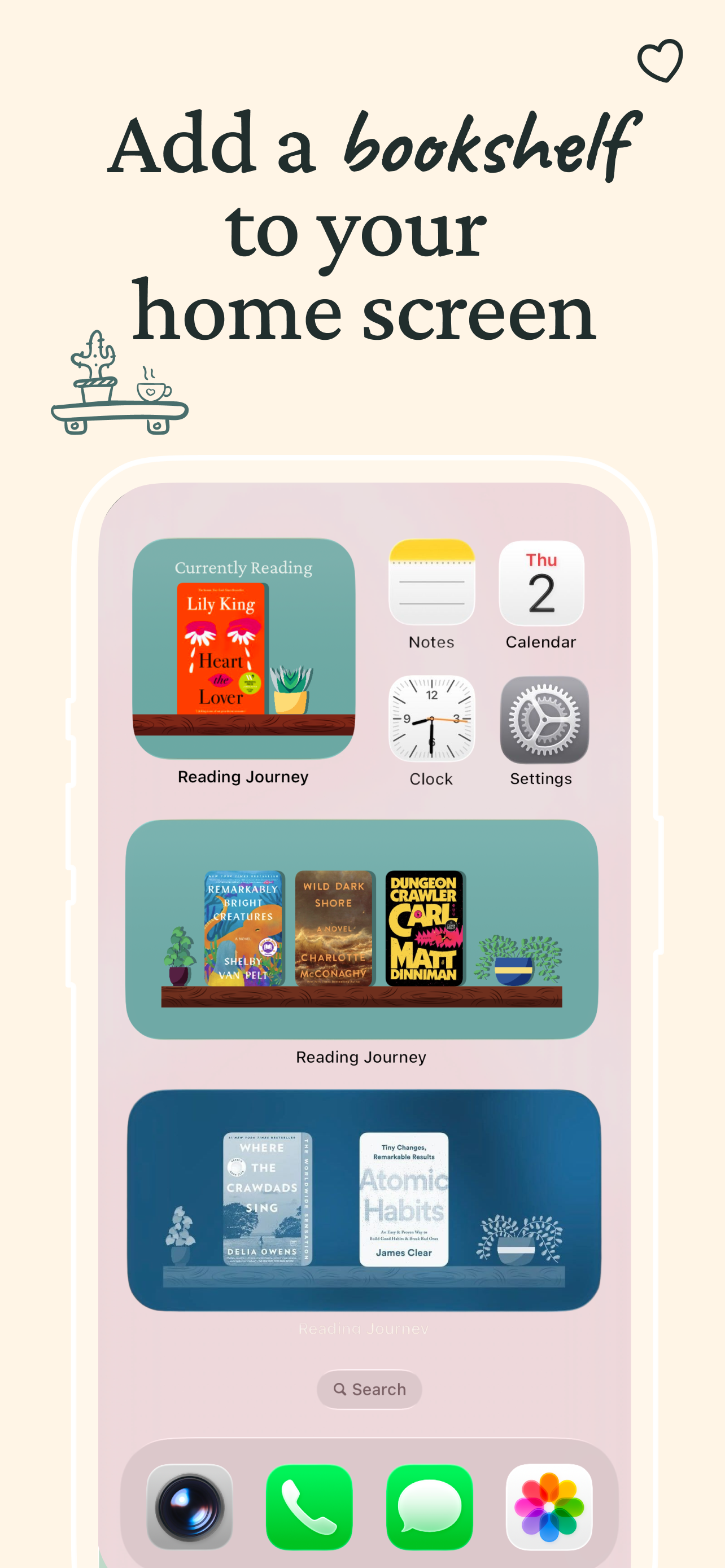
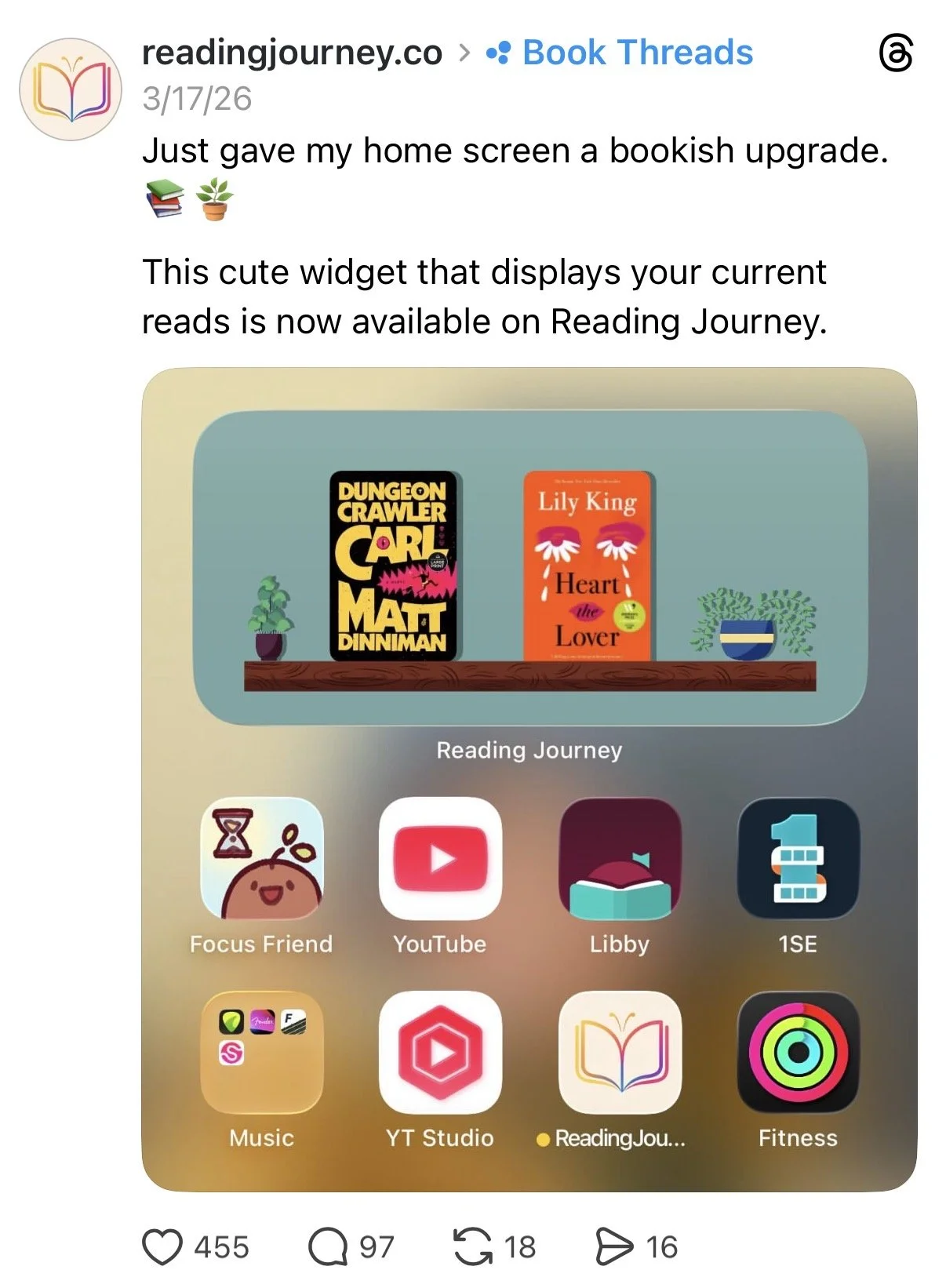
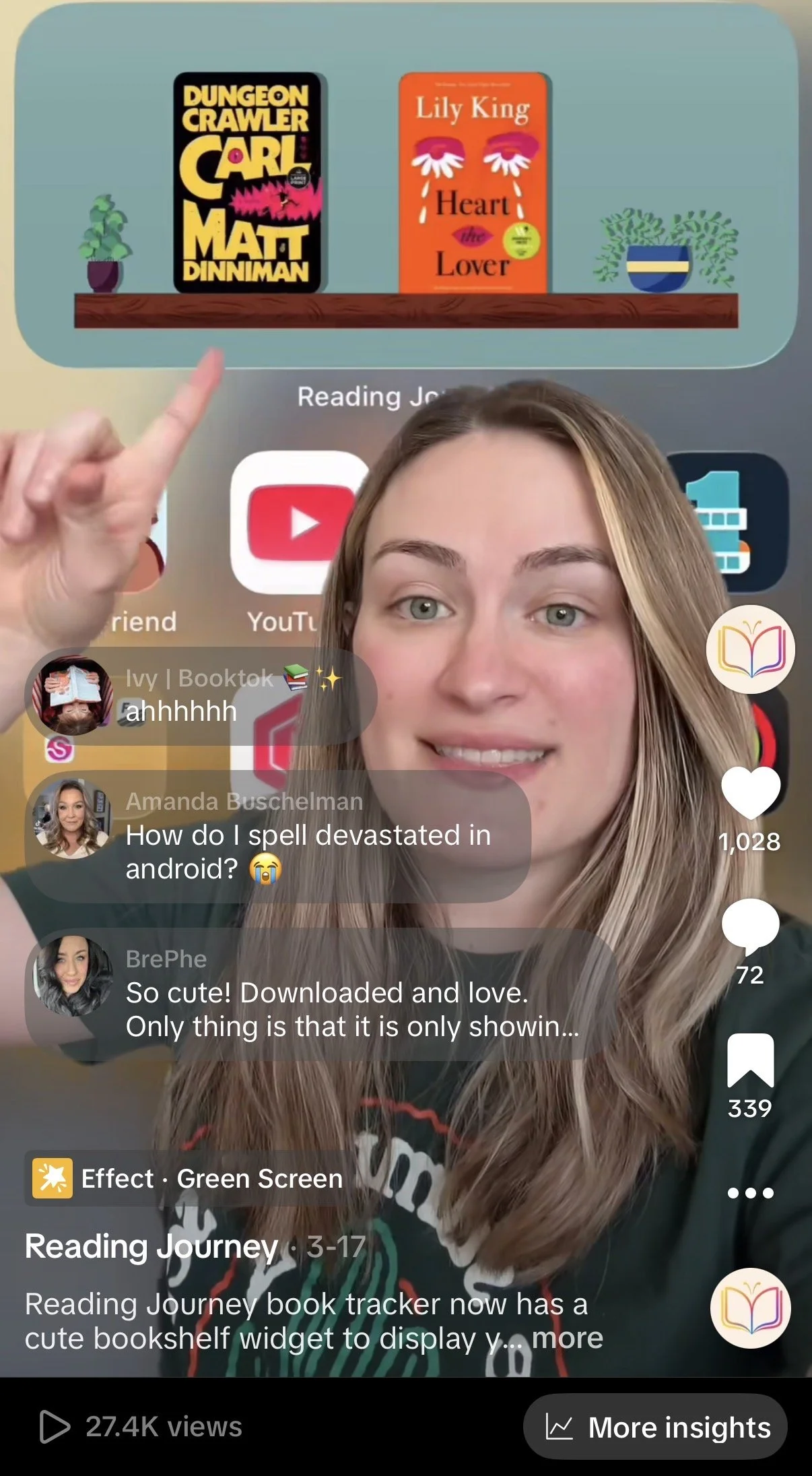
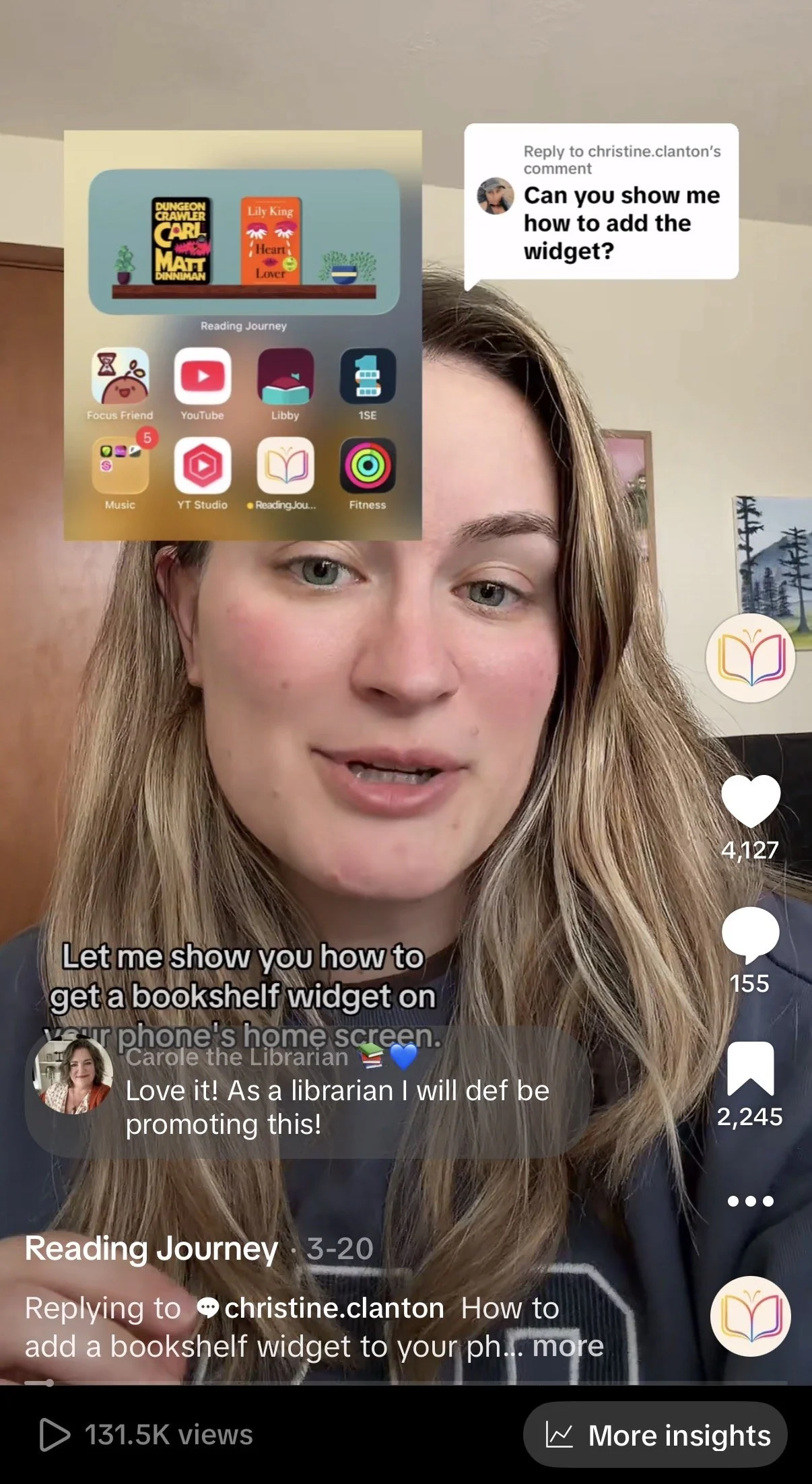
For the bookshelf widget launch, I developed a campaign built around one simple hook: "let me show you how to get a bookshelf widget on your phone's home screen." Every video featured popular books to draw the eye, and the widget's visual design — a cute bookshelf, not a streak counter — was deliberately built to stand out against every competitor on the market. The campaign ran across Threads and TikTok over one week.
RESULTS
Reached #62 in the App Store's book category within 24 hours of launch
1,000+ beta testers built entirely through organic Threads engagement before launch
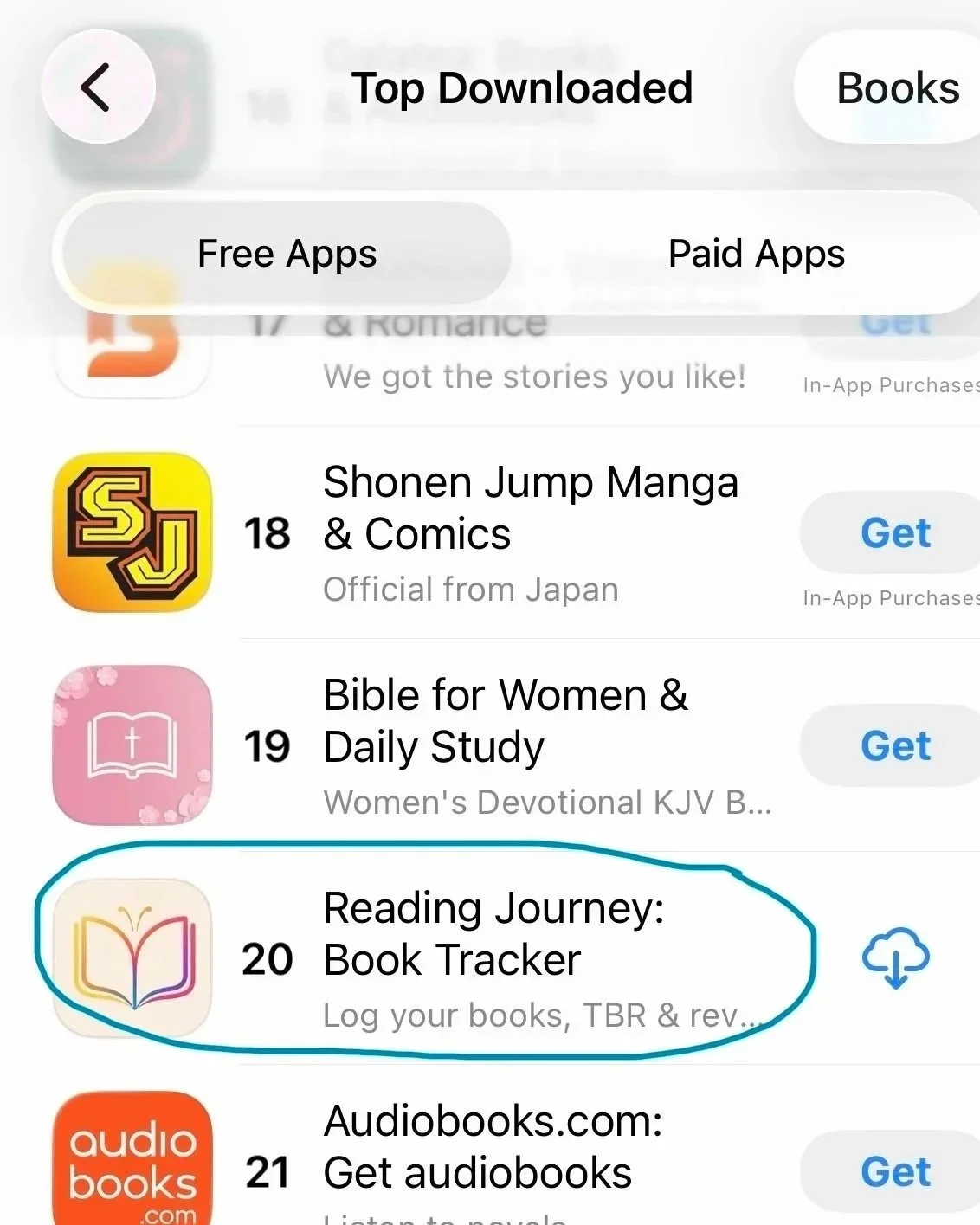
Bookshelf widget campaign generated 200K+ organic views in one week, drove 4,000 downloads, doubled monthly and annual recurring subscription revenue, and pushed the app to #20 in the App Store's book category
15K total app downloads
1.2M TikTok views | 78K likes | 11K comments | 6K shares
300K+ Threads impressions | 6K interactions
100% organic growth