Building Stikbot Into TikTok's First Toy Brand

OVERVIEW:
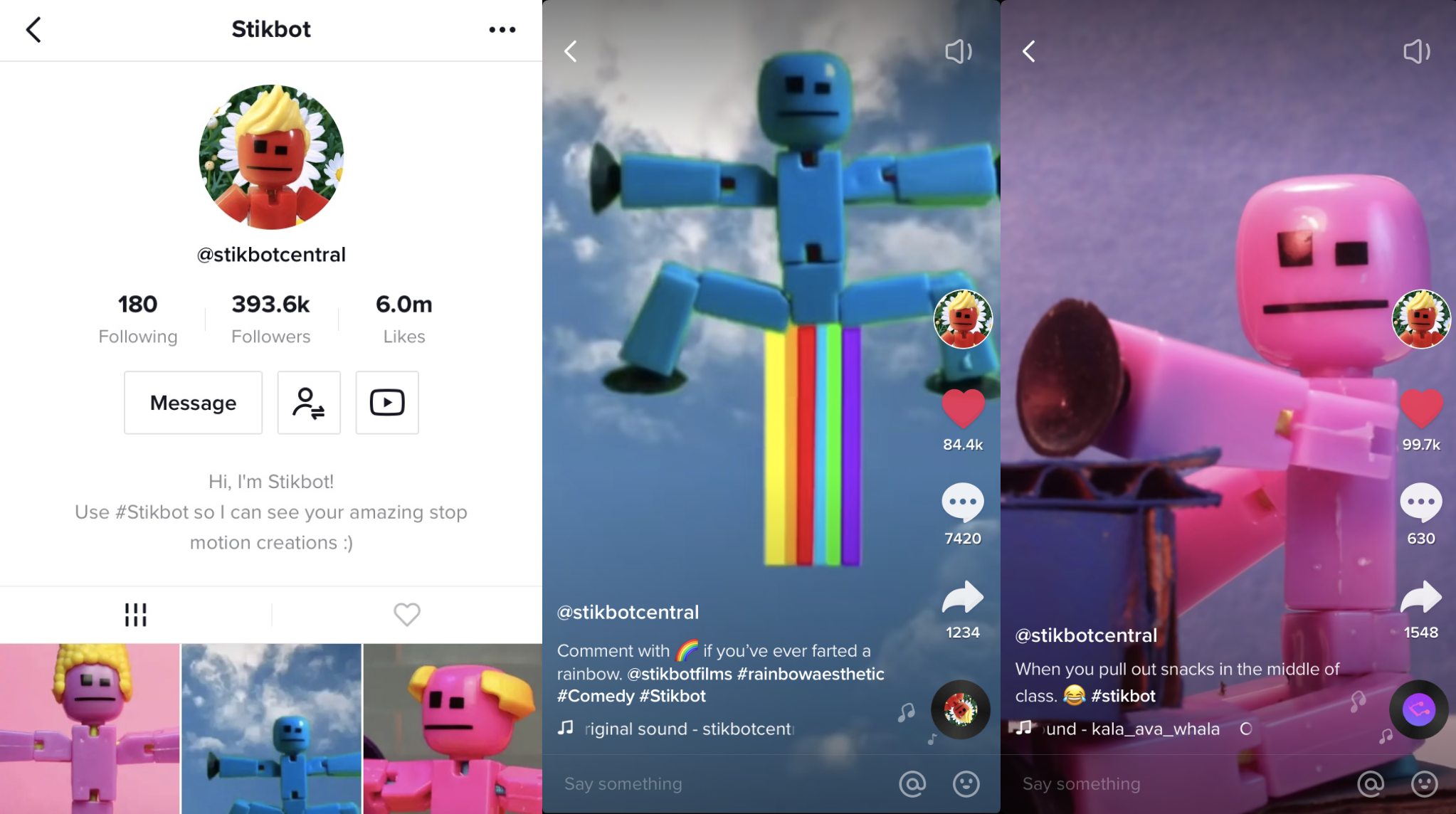
In 2017, I launched a TikTok account for Stikbot, a stop-motion animation toy by Zing Toys.
At the time, Stikbot had an audience we built on YouTube and Instagram, driven largely by young boy users consuming longer-form content. While those platforms performed well, we wanted to expand our growth further.
TikTok wasn’t even TikTok yet. It was Musical.ly at the time, still unheard of by anybody who wasn’t a kid. I saw an opportunity to expand Stikbot’s fanbase by meeting that audience where they were—before competitors arrived.
MISSION:
Rather than treating TikTok as another distribution channel, I believed it needed its own strategy.
If Stikbot showed up as a creator rather than a brand on the platform, it could gain fans & traction.
Stikbot wasn’t just a product; it was an influencer itself. That made it uniquely positioned for a platform built on participation, trends, and remix culture.
PLAN:
I officially pitched TikTok to leadership as a low-risk, high-upside growth opportunity with three guiding principles:
Content would be vertical, platform-native and exclusive.
Stikbot would act as an influencer just like other platforms. No behind-the-scenes footage allowed to break the mystique.
Success would be measured by community engagement, not just follower growth.
Once approved, I built a repeatable content system designed for speed, relevance, and scalability.
EXECUTION:
Over multiple years, I:
Owned the TikTok strategy and day-to-day management of content creators, posting, and comments.
Developed weekly content plans aligned with platform trends.
Wrote scripts and creative briefs for animators to execute.
RESULTS:
Results
350K followers in under two years
100% organic growth
50M+ total views
25K+ user-generated posts using #Stikbot
Recognized as the first toy brand to establish a presence on TikTok
Work featured in an industry article by Kidscreen highlighting early brand adoption of the platform